



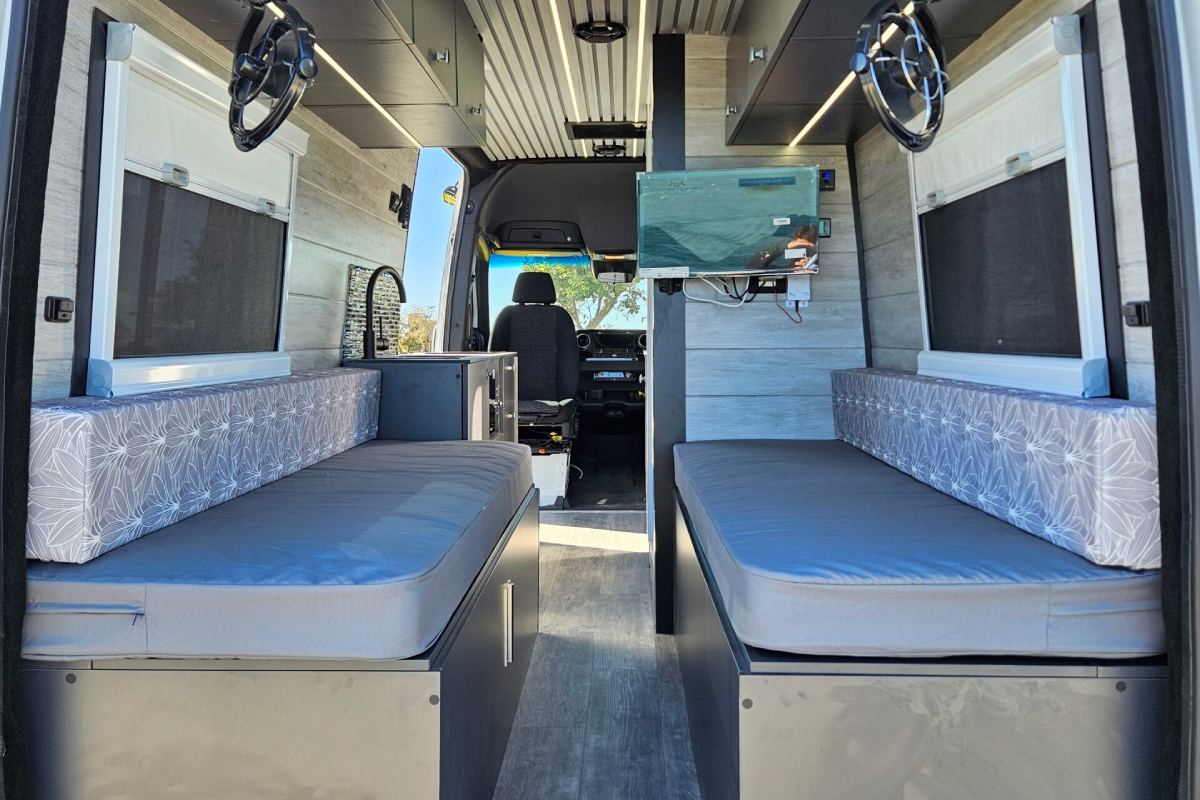
Campervan Solar System Guide: How to Power Your Van Off-Grid
Living the van life is all about freedom—and having a reliable campervan solar system is the key to powering your adventures off-grid. Whether you’re travelling across Australia or camping in remote locations, a well-designed solar setup ensures you have electricity for essential devices without relying on powered sites.
At Vanish Campers, we help travellers build efficient campervan setups that support a comfortable and independent lifestyle.
Why You Need a Solar System for Your Campervan
A solar system allows you to generate and store your own power, making off-grid travel easier and more sustainable.
Key Benefits:
- Complete off-grid freedom
- Reduced reliance on campsites
- Eco-friendly energy source
- Lower long-term costs
- Lower long-term costs
Essential Components of a Campervan Solar System
To power your van efficiently, you need the right combination of components:
1. Solar Panels
Solar panels capture sunlight and convert it into electricity. Roof-mounted panels are the most common choice for campervans.
2. Battery System
Batteries store the energy generated by solar panels. Lithium batteries are popular due to their efficiency and longer lifespan.
3. Solar Charge Controller
This regulates the power flowing from the panels to the battery, preventing overcharging and damage.
4. Inverter
An inverter converts DC power into AC power so you can run appliances like laptops, chargers, and small kitchen devices.
5. Wiring and Monitoring System
Proper wiring and a monitoring system ensure safe operation and help track power usage.
How Much Solar Power Do You Need?
Your power requirements depend on your lifestyle and devices.
Common Usage Examples:
- Common Usage Examples:
- Fridge and laptop → Medium power
- Cooking appliances → High power
Basic Recommendation:
- 100–200W → Minimal setup
- 200–400W → Standard van life
- 400W+ → Full off-grid living
Best Solar Setup for Off-Grid Van Life in Australia
Australia’s sunny climate makes solar power highly effective. For most travellers, a balanced setup includes:
- 200W–400W solar panels
- 100Ah–200Ah lithium battery
- MPPT charge controller
- Pure sine wave inverter
This setup supports daily essentials while keeping your van energy-efficient.
Common Mistakes to Avoid
- Choosing insufficient battery capacity
- Installing low-quality solar panels
- Ignoring proper wiring and safety
- Overloading your system
- Not planning future power needs
Avoiding these mistakes ensures long-term reliability and performance.
Conclusion
A well-designed campervan solar system is essential for enjoying off-grid travel across Australia. By choosing the right components and setup, you can power your van efficiently and travel without limits.
Contact Vanish Campers today to build your perfect off-grid campervan.
FAQ Section
A campervan solar system captures sunlight through solar panels, converts it into electricity, and stores it in a battery to power appliances inside the van.
Most campervans require between 200W to 400W of solar panels, depending on power usage and appliances.
Lithium batteries are the best choice due to their longer lifespan, faster charging, and higher efficiency compared to traditional batteries.
Yes, you can run lights, fridges, laptops, and small appliances. Larger appliances may require a bigger system.
Yes, with the right setup, solar power can fully support off-grid living, especially in sunny regions like Australia.
Professional installation ensures safety, efficiency, and proper system design, especially for complex setups.