



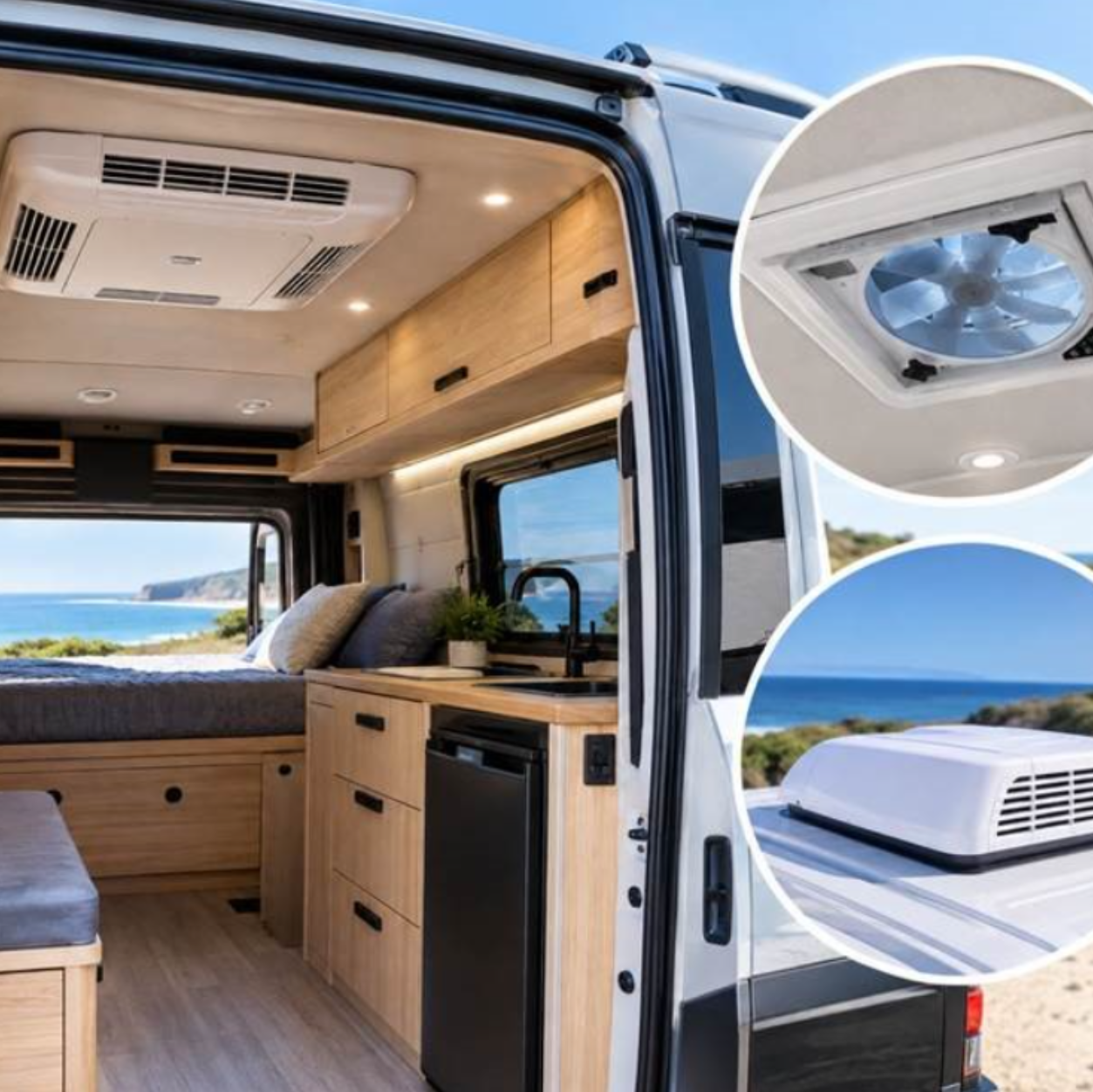
Brisbane’s warm conditions can make temperature control an important part of a comfortable campervan. A suitable air conditioning system can help create a more pleasant interior during hot days and warmer nights, while ventilation can improve airflow and help manage humidity and condensation. Before choosing Campervan AC Fitouts Brisbane, it is worth considering your van layout, electrical setup, travel plans and the type of cooling you need. Vanish Campers provides air conditioning, roof fan and Sirocco fan solutions as part of its campervan conversion services.
Why Does a Campervan Need Proper Cooling?
A campervan has a compact interior, which means heat can build up quickly, particularly when the vehicle is parked in direct sunlight. Good temperature control can make the space more comfortable for relaxing, cooking and sleeping.
Air conditioning provides active cooling, while roof vents and 12V fans can improve air movement by helping warm air escape and bringing fresh air into the vehicle. Vanish Campers notes that ventilation can also help reduce stuffiness and condensation inside a campervan.
What Should You Consider Before an AC Fitout?
1. Consider How You Use Your Campervan
Your travel style should influence the cooling system you choose. Someone using a campervan mainly for short weekend trips may have different requirements from someone planning extended touring or off-grid travel.
Think about where you normally travel, how long you stay inside the van during the day and whether you regularly sleep in the vehicle during warmer weather. These details can help determine whether air conditioning, ventilation or a combination of both makes sense for your build.
2. Look at Your Available Electrical Power
Air conditioning needs to work with the campervan’s electrical system. If you plan to travel away from powered campsites, the cooling system needs to be considered alongside your batteries, solar setup, inverter and other electrical equipment.
Vanish Campers offers solar and electrical installations, including solar panels, batteries, inverters, 12V systems and other electrical components designed for campervan use. Planning these systems together can help create a more practical off-grid setup.
3. Think About Ventilation as Well as Air Conditioning
Air conditioning is not the only way to improve the internal climate of a campervan. Roof vents and 12V fans can provide continuous airflow and may be particularly useful when active cooling is not required.
Strategically positioned ventilation can help move hot air out of the vehicle and reduce moisture accumulation. Vanish Campers offers roof vents and 12V fan solutions alongside air conditioning as part of its Aircon & Fans service.
4. Plan the System Around the Interior Layout
The location of cooling and ventilation equipment should work with the rest of the conversion. Beds, cabinetry, kitchen areas, electrical components and storage all occupy valuable space inside a campervan.
Planning the cooling system during the wider conversion can make it easier to position equipment without compromising the usability of the interior. Vanish Campers’ conversion services bring together features such as bedding, kitchen and living areas, solar and electronics, insulation, air conditioning and ventilation.
5. Consider Insulation Before Installation
Cooling performance is also influenced by how well the campervan interior manages heat. Insulated walls and ceilings can help create a more comfortable internal environment and work alongside the cooling system.
Vanish Campers installs insulated walls and floors as part of its conversion services, with the insulation designed to improve comfort and support the overall interior build.
Air Conditioning or Fans: Which Is Right for Your Campervan?
The choice depends on your travel requirements and the conditions in which you expect to use the vehicle. Air conditioning provides active cooling and can be useful during particularly hot conditions. Fans and roof vents focus on airflow and ventilation while generally requiring less power.
As discussed in the previous blog, “Custom Campervan Kitchen Fitouts in Brisbane: What Are Your Options?”, planning a campervan interior involves considering how different features work together within the available space. The same approach is useful when choosing cooling and ventilation equipment, as the system should complement your campervan’s layout, electrical setup and everyday travel needs.
For some campervan owners, combining both options can provide greater flexibility. Air conditioning can be used when stronger cooling is required, while fans can provide everyday airflow and help manage condensation.
Why Professional Installation Matters
Installing cooling equipment as part of a campervan conversion involves more than simply choosing a unit and finding somewhere to mount it. The system needs to work with the vehicle’s available space, electrical configuration and other conversion components.
A professional conversion team can consider these requirements together rather than treating air conditioning as an isolated addition. Vanish Campers specialises in custom campervan conversions and can incorporate air conditioning and ventilation into broader layouts designed around individual travel requirements.
Prepare Your Campervan for Brisbane Conditions
A well-planned cooling system can make a noticeable difference to how comfortable your campervan feels during warm-weather travel. Before installation, consider your travel habits, electrical capacity, insulation, interior layout and the balance between active cooling and ventilation.
For those planning Campervan AC Fitouts Brisbane, Vanish Campers can incorporate air conditioning and fan systems into custom campervan conversions, helping create a practical interior designed around the way you travel.
Frequently Asked Questions
Yes, an existing campervan may be suitable for an AC upgrade. The installation will depend on factors such as the vehicle’s interior configuration, available mounting space and electrical capacity. A conversion specialist can review the current setup and identify the most practical way to integrate cooling equipment.
Not necessarily. The right setup depends on how and where you travel. Air conditioning provides active cooling, while fans and roof vents improve airflow and help manage condensation.
Power requirements depend on the specific system and how long it is operated. If you plan to use air conditioning while travelling off-grid, your solar, battery and inverter setup should be considered as part of the overall conversion.
Insulation can help improve the interior’s ability to manage temperature. It works alongside air conditioning and ventilation to create a more comfortable campervan environment.
Yes. Air conditioning and ventilation can be considered alongside other conversion elements such as electrical systems, insulation, bedding, kitchens and storage. This allows the available space and systems to be planned together.